

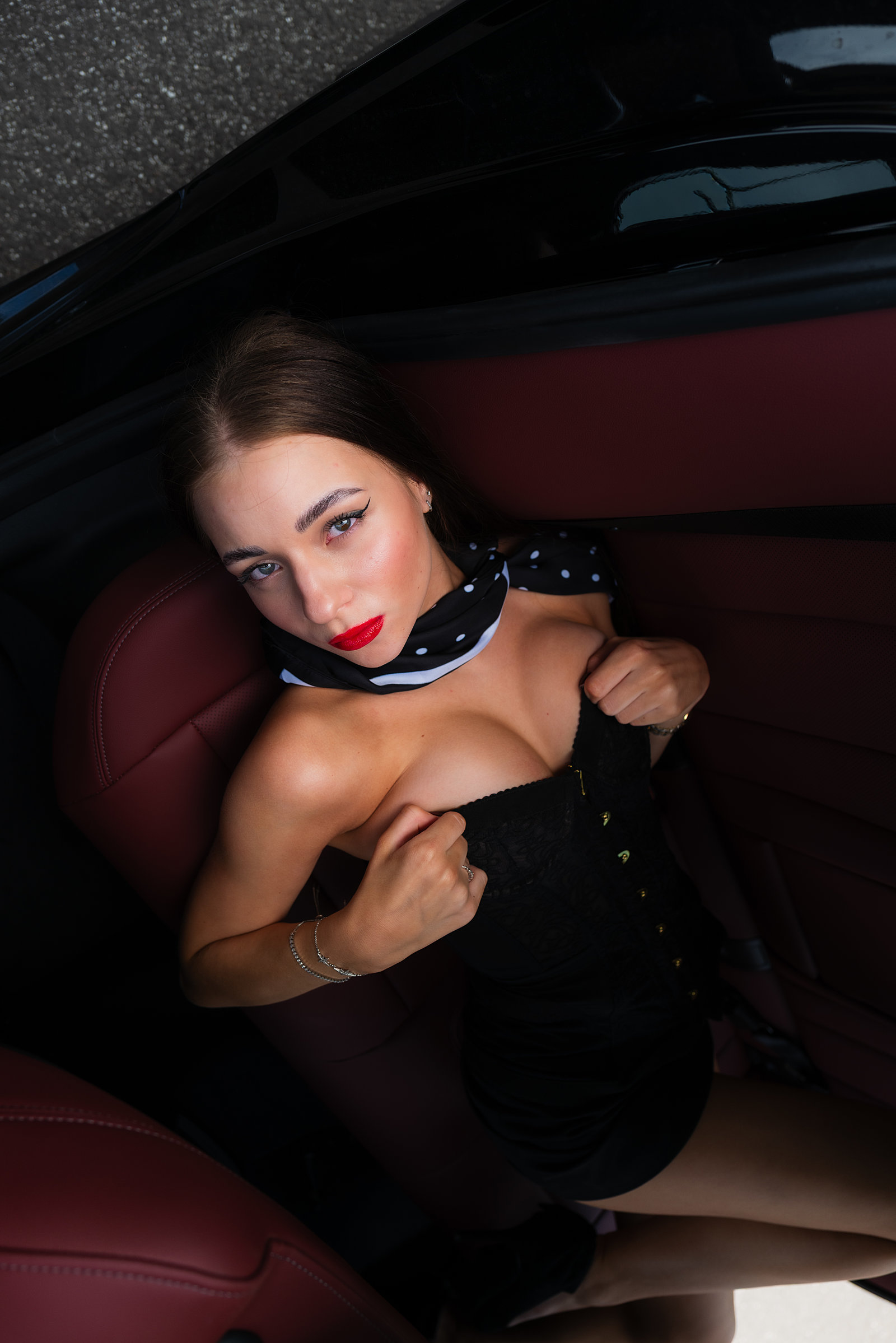
A car can be a prop, a location, a lighting modifier and a character—all within the same frame. For Backseat Noir, our fashion story with Kseniya, we worked with a brand-new BMW. Its deep burgundy interior, dark polished surfaces and tight architectural lines gave the series its visual language before the first photograph was made.
Shooting with a car looks effortless in the finished images. In practice, it requires careful decisions about space, reflections, styling, safety and light. This guide explains how to plan a fashion or portrait photoshoot with a car—and what the BMW taught us during this editorial.
Why Cars Work So Well in Fashion Photography
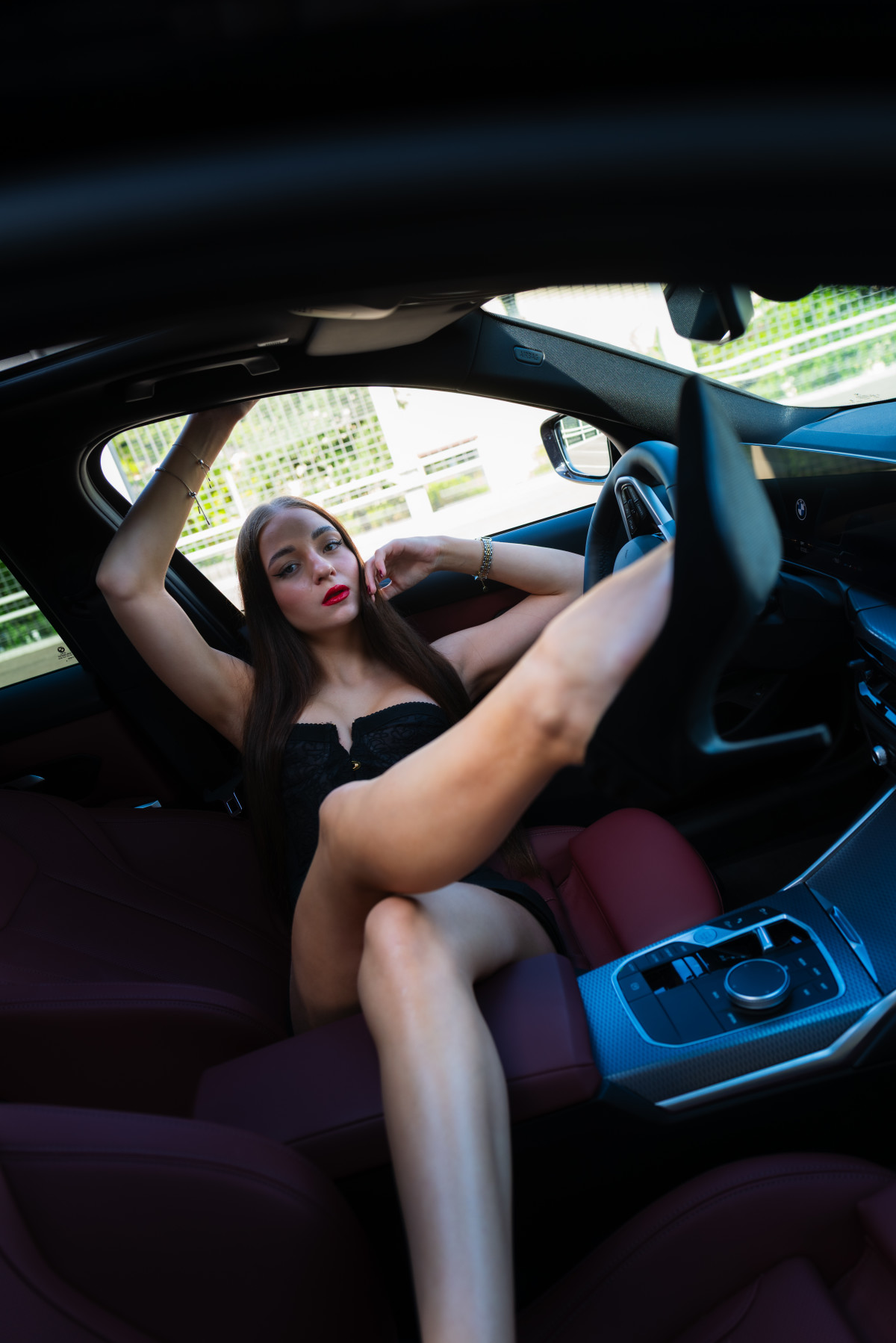
Cars carry instant associations: movement, privacy, status, escape, nightlife and control. A model standing beside a vehicle can feel cinematic; a model photographed inside one can feel private and psychologically close. The cabin narrows the world around the subject, which makes every hand, glance and shift of posture more deliberate.
The design also supplies ready-made composition. Door frames create borders. Windows become light sources. Seats introduce curves and color fields. Mirrors produce secondary viewpoints. Glossy trim catches highlights that can lead the eye through the image. When these elements support the wardrobe and model, the car stops being decoration and becomes part of the story.
Start With the Concept, Not the Vehicle Badge
A recognizable car brand can add cultural meaning, but the badge alone cannot carry an editorial. First define the mood: polished or raw, restrained or rebellious, daylight or nocturnal, exterior architecture or enclosed intimacy. Then choose a vehicle whose materials and proportions reinforce that direction.
For Backseat Noir, the new BMW worked because of the burgundy leather interior, black surfaces and controlled, premium geometry. Kseniya's black corset, patent details, graphic scarf and red lipstick connected directly to that palette. The BMW felt integrated with the styling rather than added afterward.
“The strongest car photographs do not show a model next to an object. They make the model, styling and vehicle feel like one visual decision.”
Plan the Car as a Real Location
Treat the vehicle exactly as you would treat a studio or architectural location. Confirm permission to use it, decide where it can remain safely parked and inspect the surroundings for unwanted reflections. Clean the windows, bodywork and interior shortly before the session; high-resolution photographs reveal fingerprints, dust and fabric lint immediately.
Build a shot list before the model gets into position:
- Interior hero frame — the strongest portrait using the seat and window geometry
- Open-door composition — connecting the private interior with the outside environment
- Exterior fashion frame — showing more silhouette and movement
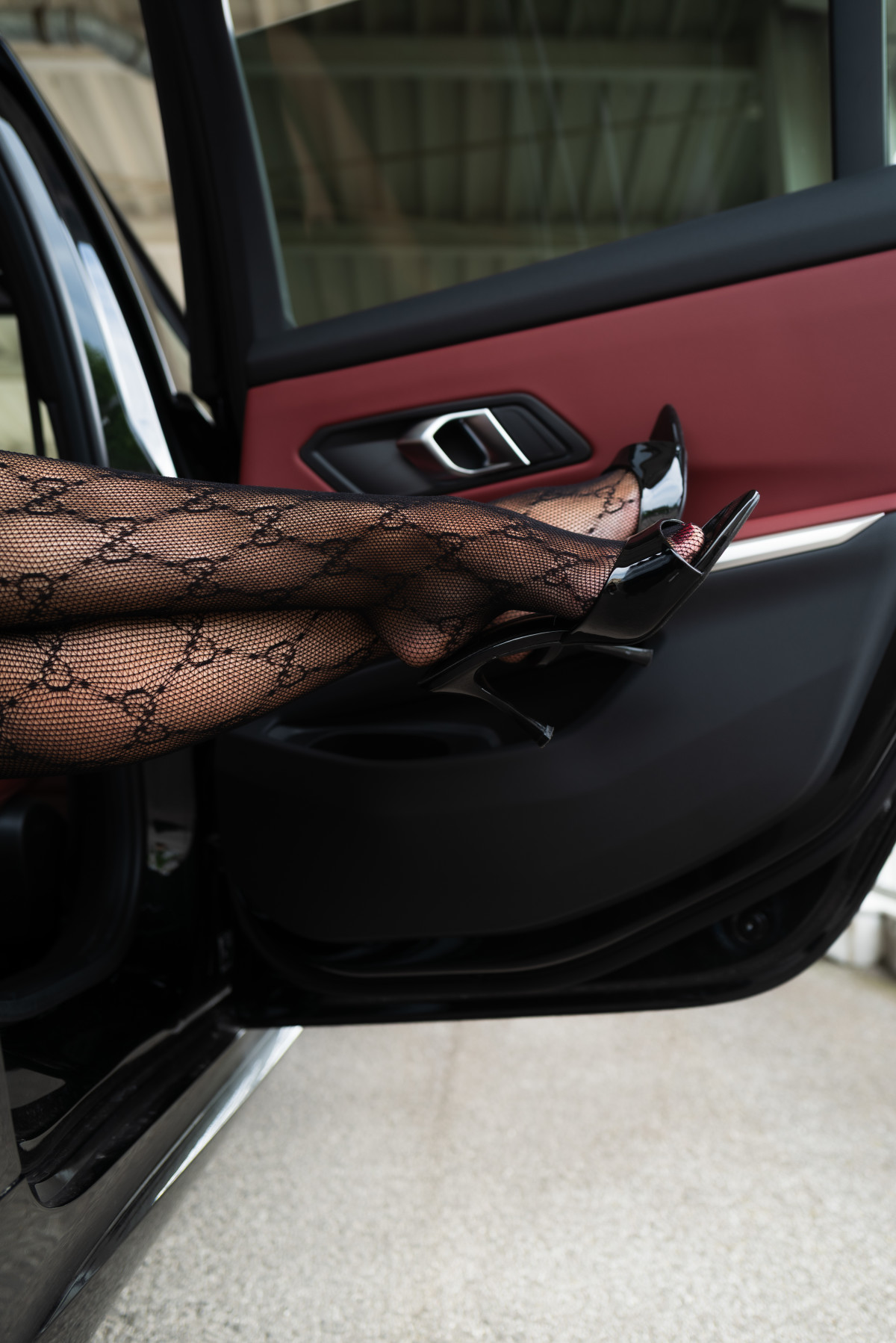
- Detail image — hands, shoes, mirror, trim, stitching or door hardware
- Transition frame — entering, leaving or leaning across the vehicle
Working Inside a Tight Car Interior
Space is the first technical constraint. A wide lens may show the cabin but exaggerate limbs and facial features when used too close. A longer lens creates flattering compression but may leave no physical room to compose. The solution is to test several positions: shooting through an open door, across the center console, from the opposite seat and through an open window.
Direct the model around the structure that already exists. A seat back can support a diagonal pose. The door opening can frame the torso. The headrest can anchor the face. Ask for small movements rather than completely new poses: rotate the chin, shift one shoulder, lengthen a wrist, move the knee or change the direction of the eyes. In a confined space, a five-centimeter adjustment can transform the composition.
Use Window Light Before Adding Equipment
A vehicle is effectively a small dark studio with several irregular softboxes. The windscreen gives broad frontal light, side windows create direction and an open door can dramatically increase contrast and exposure on one side of the model.
Begin by turning or repositioning the parked car relative to daylight. Then choose which doors and windows remain open. Only after that should you add a reflector, compact LED or flash. Large modifiers are difficult to place around a vehicle and can create new reflections across paint, glass and polished trim.
In the BMW, natural daylight entering through the open doors gave Kseniya's skin a clean, realistic finish while the dark roof and interior preserved the noir atmosphere. The balance worked because the shadows were allowed to remain part of the image.
Control Reflections Deliberately
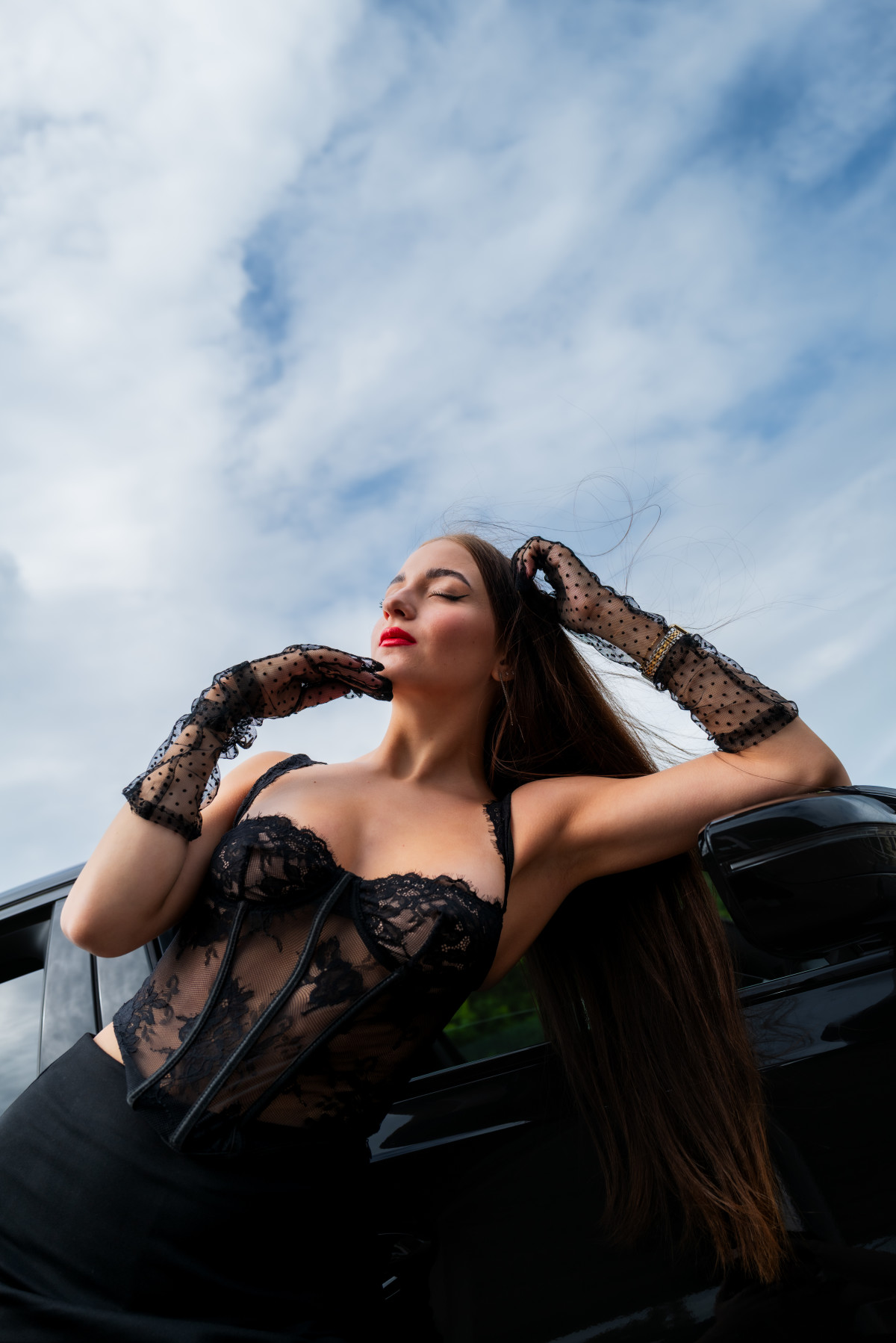
Modern cars are filled with reflective materials: glass, piano-black trim, screens, chrome, lacquered paint and mirrors. Before each frame, scan those surfaces for the photographer, equipment, bright clothing, nearby vehicles and distracting architecture.
Small changes usually solve more than heavy retouching. Lower the camera. Move half a step sideways. Turn the steering wheel. Open a door. Remove a bright object from the opposite side of the car. A circular polarizer can help with some reflections, but it affects different panels and windows unevenly. It is a refinement tool, not a substitute for positioning.
Style for the Interior
Wardrobe must work physically as well as visually. Long rigid garments, oversized accessories and delicate materials can become difficult inside a cabin. Choose looks that let the model sit, recline and rotate without damaging the clothing or vehicle.
For this BMW editorial, the black corset created structure against the burgundy leather. Patent textures echoed the polished trim, while the scarf introduced a graphic pattern that remained readable in close frames. The red lip repeated the interior color without matching it too literally. These connections made the styling feel designed for the location.
Protect the Vehicle and the People
Keep the car parked securely during portrait work. Never ask a model or photographer to pose in an unsafe traffic situation, and do not shoot from a moving vehicle unless a properly permitted, professionally controlled production has been arranged.
Protect seats and trim from sharp jewelry, metal heels, makeup and styling products. Keep water available, ventilate the cabin and schedule short breaks—car interiors heat up quickly even when the weather feels mild. Confirm which controls, doors and surfaces may be used before the session begins.
When a Car Photoshoot Is the Right Choice
A vehicle works especially well for fashion editorials, musician portraits, luxury campaigns, personal branding and model portfolio updates that need a strong narrative location. It is less useful when the car has no relationship to the subject or when the composition becomes more about displaying the vehicle than communicating the intended story.
The goal is coherence. In Backseat Noir, the brand-new BMW gave us privacy, color, geometry and a sense of controlled luxury. Kseniya supplied the presence and tension. The final photographs work because neither element feels interchangeable.
See the Complete BMW Editorial
Explore all eleven photographs from Backseat Noir with Kseniya, including the interior portraits, exterior fashion frames and details around the BMW.