

Lingerie and underwear photography can be a portrait, a fashion statement or a fully staged story. The most useful references show how much a photograph can change when the setting, gesture or visual language changes—even when the clothing is deliberately simple.
These ten influential lingerie and underwear photographers offer ten different routes into that question. From Calvin Klein’s stripped-back campaigns to Agent Provocateur’s cinematic scenes and La Perla’s precise styling, each entry pairs a credited reference photo with a practical idea to study.
How these photographers were selected
This is a curated top ten, ordered for discovery. It is not a ranking based on search volume, awards or an objective measure of fame. Each entry has a documented lingerie, underwear or bodywear connection; Russell James adds a backstage perspective on the Victoria’s Secret world. Mert Alas and Marcus Piggott count as one partnership.
The reference photographs focus on women, spanning campaigns, lingerie styling and portraiture. Bruce Weber’s Patricia Arquette portrait and Russell James’s backstage image add context alongside the advertising work. Visual readings are editorial observations, not claims about equipment or lighting. Sources were checked on October 15–16, 2026.
Ellen von Unwerth
Character, play and cinematic tension
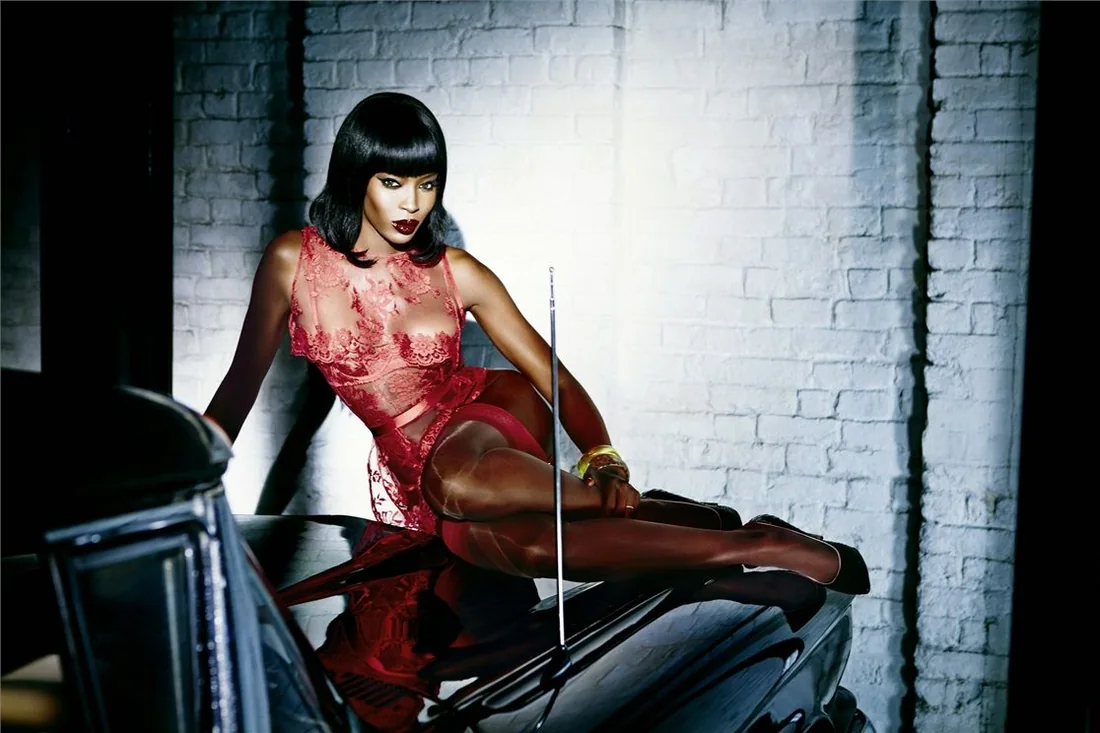
Ellen von Unwerth is a compelling starting point for lingerie photography that gives its subject a character to play. Her Agent Provocateur Spring/Summer 2015 campaign with Naomi Campbell puts the clothes inside a cinematic situation. The campaign is useful to study when a brief needs an attitude, a setting and an implied story alongside the product.
In this reference, the red lingerie interrupts a predominantly dark scene. Campbell’s seated pose, the car and the direction of her gaze give the frame a sense of something about to happen. The photograph has a clear centre of attention, but its surroundings keep the viewer looking. Styling and location contribute to the same mood.
What to studyWrite a one-sentence scene before choosing poses. A specific character gives the model something to respond to.
Herb Ritts
Lingerie styling inside a playful portrait
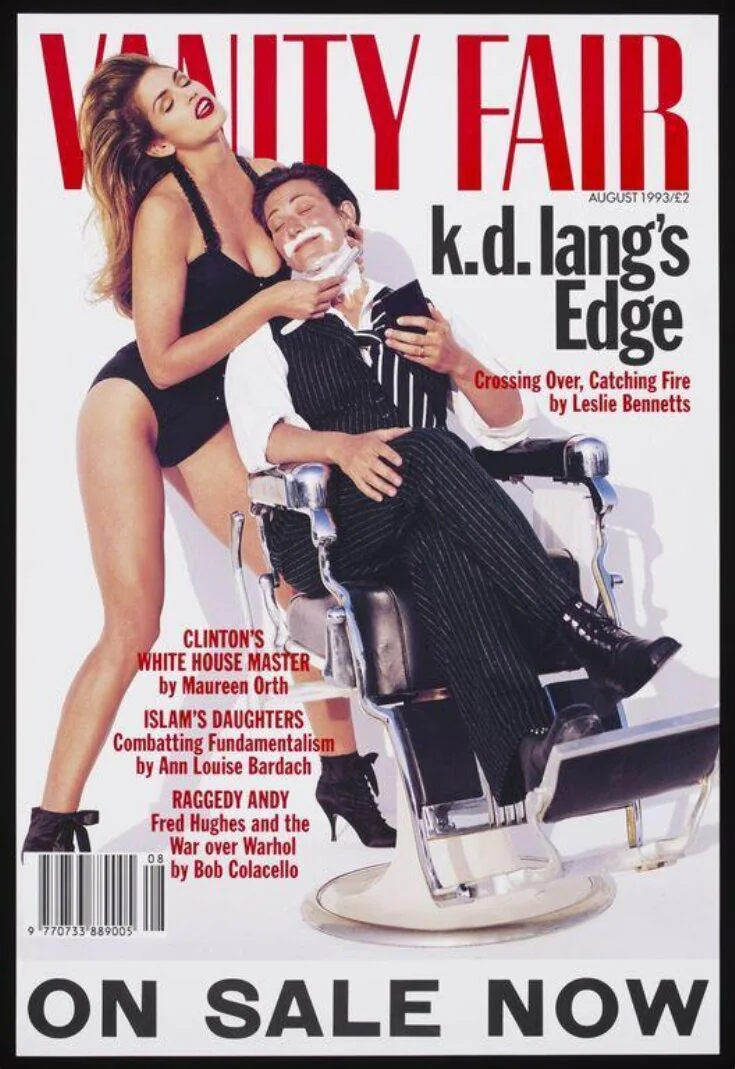
Herb Ritts brings lingerie styling into a portrait with a story. His August 1993 Vanity Fair cover pairs Cindy Crawford with singer k.d. lang. The magazine credits Crawford’s corset to Chantal Thomass and briefs to Capezio; the reference is the cover’s promotional poster, held in the V&A collection.
Crawford’s dark silhouette contrasts with lang’s pinstriped suit and the white background. The barber’s chair and shaving gesture turn the wardrobe into part of a playful scene. Two contrasting characters give the composition its energy.
What to studyGive the wardrobe a role in a specific interaction, then compose around the relationship between the subjects.
Russell James
Backstage access and personality
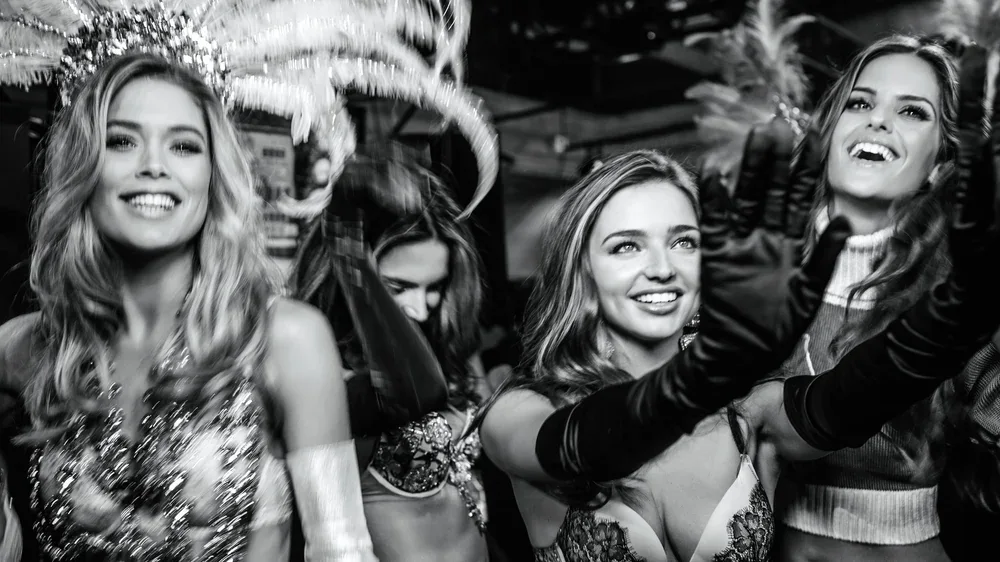
Russell James brings the Victoria’s Secret world into the selection through his backstage photography. His Backstage Secrets project and official archive offer a different perspective on lingerie image-making: the personalities, friendships and preparation surrounding the finished performance. The reference here is a backstage portrait, rather than a product campaign.
Doutzen Kroes, Miranda Kerr and Izabel Goulart share the frame in a moment of visible amusement. The closeness between the figures and their different expressions keep the group photograph lively. Studying this image beside a polished campaign is useful: the clothes establish context, while the interaction supplies the emotional reason to look.
What to studyLeave room for interaction between directed frames. Personality can become the strongest part of a fashion story.
Mert Alas & Marcus Piggott
Polish, tonal control and precise styling
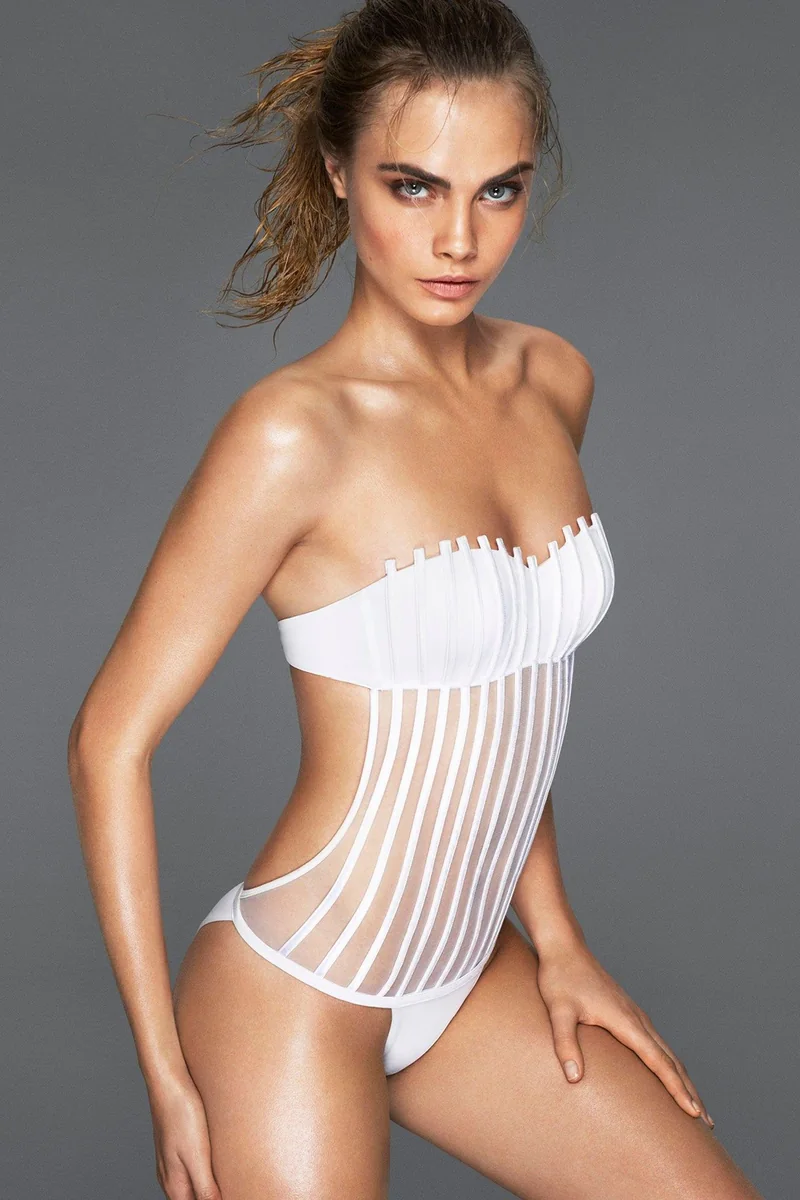
Mert Alas and Marcus Piggott are counted together as one photographic partnership in this top ten. Their La Perla Spring/Summer 2014 campaign featured Cara Delevingne, Liu Wen and Malgosia Bela. Vogue’s campaign coverage credits the duo and provides the context for the Cara Delevingne reference reproduced here.
The white corset sits against a restrained grey setting, giving the garment’s construction room to register. The pose and direct gaze provide presence without needing a detailed location. Compare the pale fabric, skin tones and dark hair: their separation helps the photograph feel carefully organised while keeping the styling at its centre.
What to studyBuild a small palette around the garment. Each surrounding tone should help its shape and texture read clearly.
Mario Sorrenti
Poise, clean space and a carefully held gesture
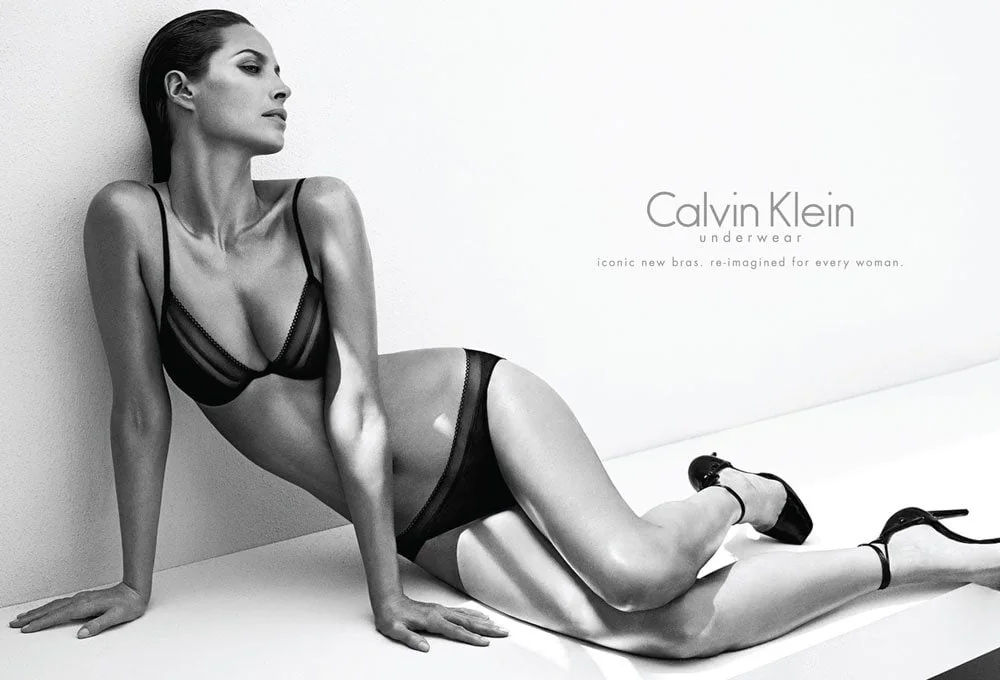
Mario Sorrenti photographed Christy Turlington Burns for Calvin Klein Underwear’s Fall 2013 campaign in Vieques, Puerto Rico. The campaign announcement documents her return to the brand and identifies this as their first advertising collaboration. It provides a useful reference for lingerie photography built around a model’s presence and the clarity of the garment.
The white setting gives Turlington’s black lingerie a precise outline. Her extended arms and bent legs create a sequence of angles across the frame, while her gaze leads away from the camera. The composition feels poised without becoming rigid. Study how the empty space around the figure helps each gesture remain readable.
What to studyUse negative space to separate the subject’s outline from the setting. A clear silhouette gives a subtle gesture more weight.
Helmut Newton
Bodywear, setting and assertive composition
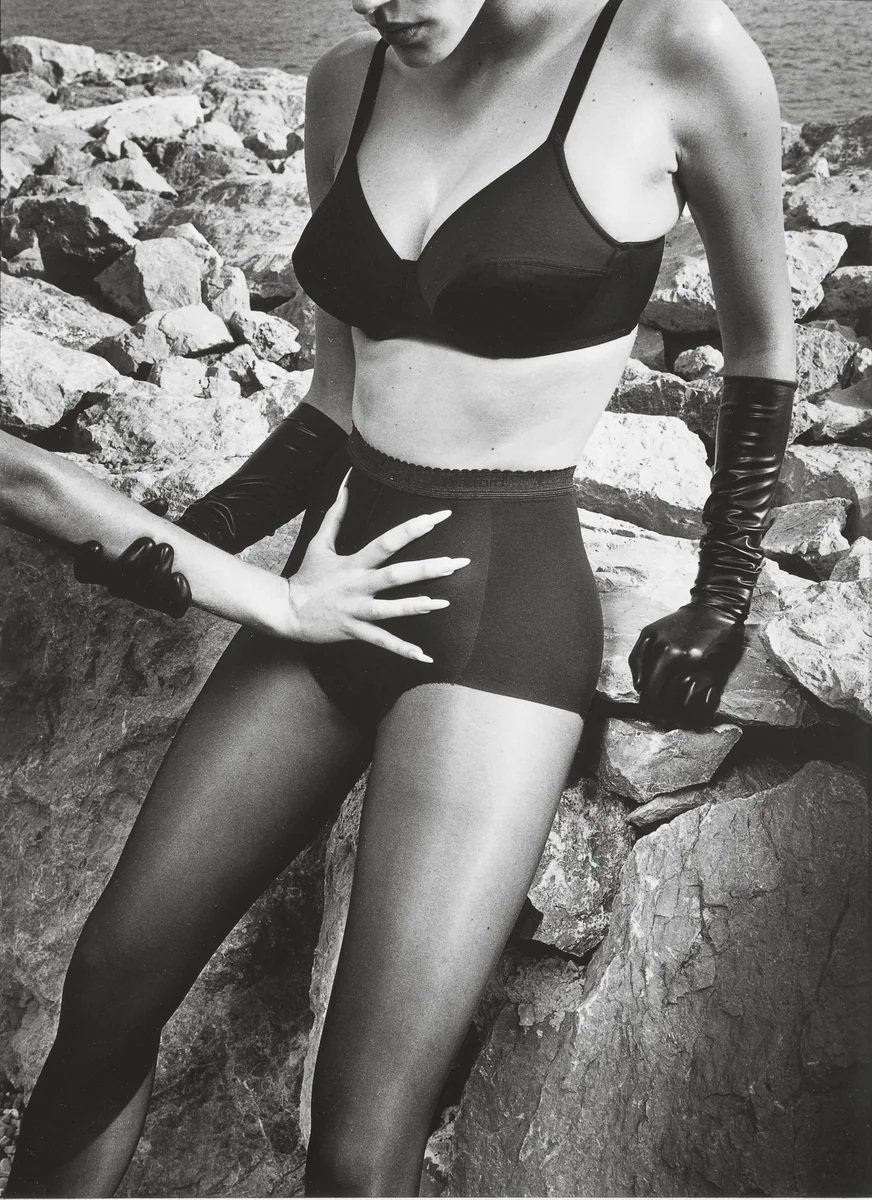
Helmut Newton expands the discussion from lingerie to bodywear through his work for Wolford. The Helmut Newton Foundation’s Brands exhibition documents his commercial collaborations, including Wolford calendars. The specific photograph shown here is titled Wolford Publicity, Monte Carlo, 1995, as recorded in Christie’s catalogue.
Dark bodywear and long gloves create firm shapes against the pale, irregular rocks. The close framing makes the garment, the hands and the location compete for attention in a deliberate way. Another figure’s hand enters the image, adding a narrative question. The setting is active visual material, rather than a neutral backdrop.
What to studyTest how the location changes the meaning of the styling. Texture and framing can make familiar garments feel unexpected.
Bruce Weber
Personality within an intimate portrait
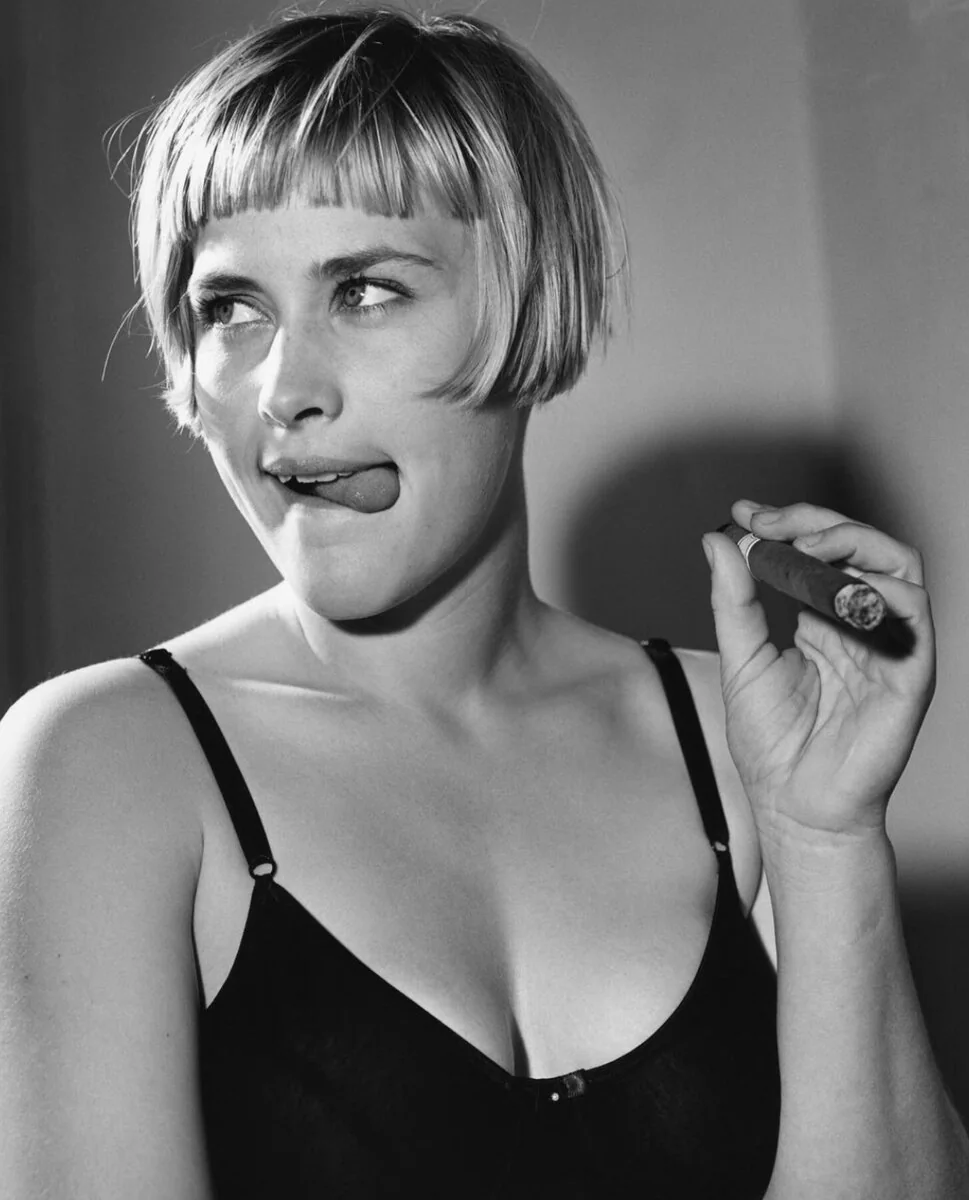
Bruce Weber’s place in underwear photography is grounded in his Calvin Klein campaigns. For this selection of photographs of women, his 1992 portrait of Patricia Arquette adds a study of personality. Alta’s archive listing on Artsy documents the work. This is a portrait reference, rather than an underwear advertisement.
The black strappy top leaves a simple outline beneath Arquette’s face. Her sideways glance, raised hand and unexpected expression give the portrait a spontaneous quality. The restrained background keeps those details visible. For an editorial moodboard, the useful lesson is the way a small gesture can carry more character than a complicated set.
What to studyBuild space for a subject’s own expression. An unguarded gesture can give an intimate fashion portrait its identity.
Miles Aldridge
Colour, domestic theatre and constructed stories
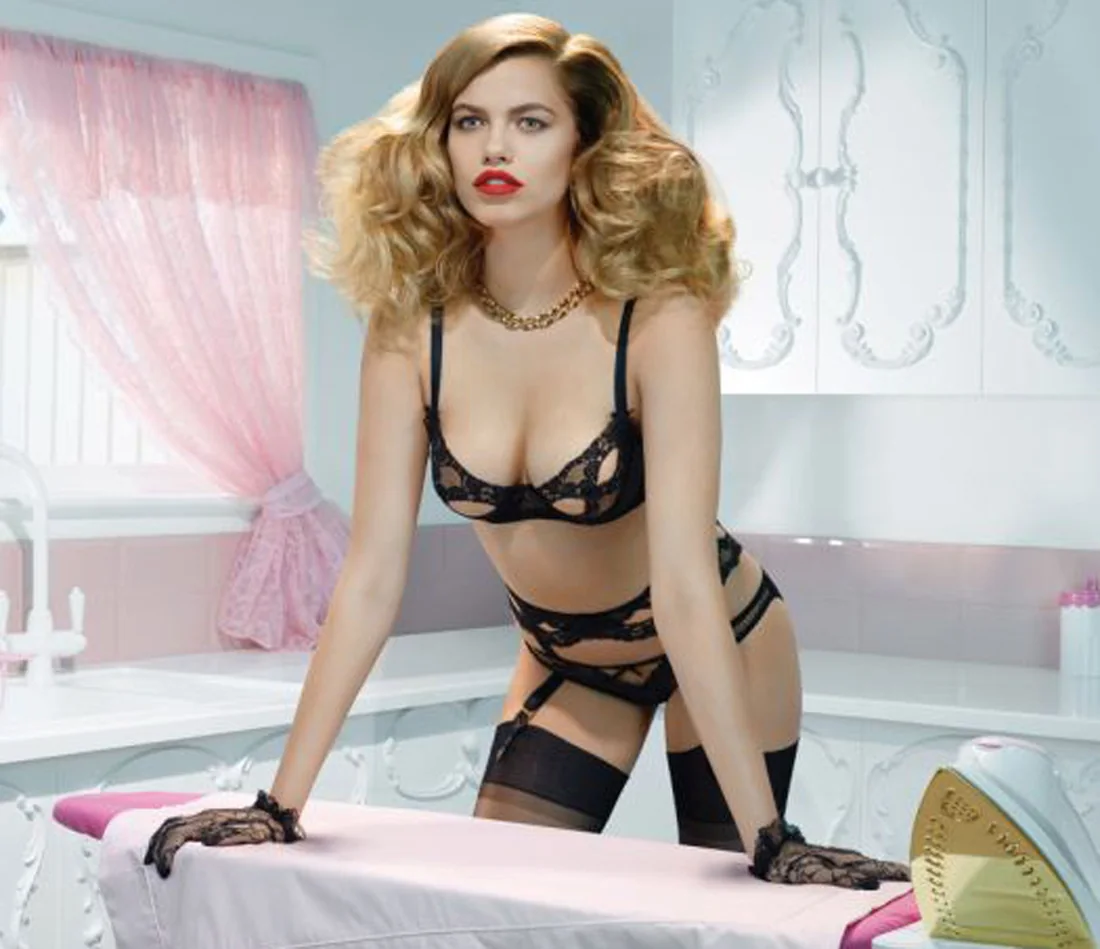
Miles Aldridge photographed Agent Provocateur’s 2014 Behind Closed Doors campaign with Hailey Clauson. The Independent’s coverage credits both Aldridge and set designer Anna Burns. That collaboration is worth recognising: this kind of lingerie image relies on an entire constructed environment, with photography, styling and set design working together.
The domestic setting gives ordinary objects a theatrical role. Pale colours, patterned surfaces and the ironing board frame the figure, while the model’s gesture disrupts the apparent routine. The photograph asks the viewer to read a scene. It offers a useful alternative when a lingerie editorial needs a concept that extends beyond a sequence of isolated poses.
What to studyGive props a narrative purpose. Every object should help explain the scene or create a productive question.
David Sims
A spare frame with an individual gesture
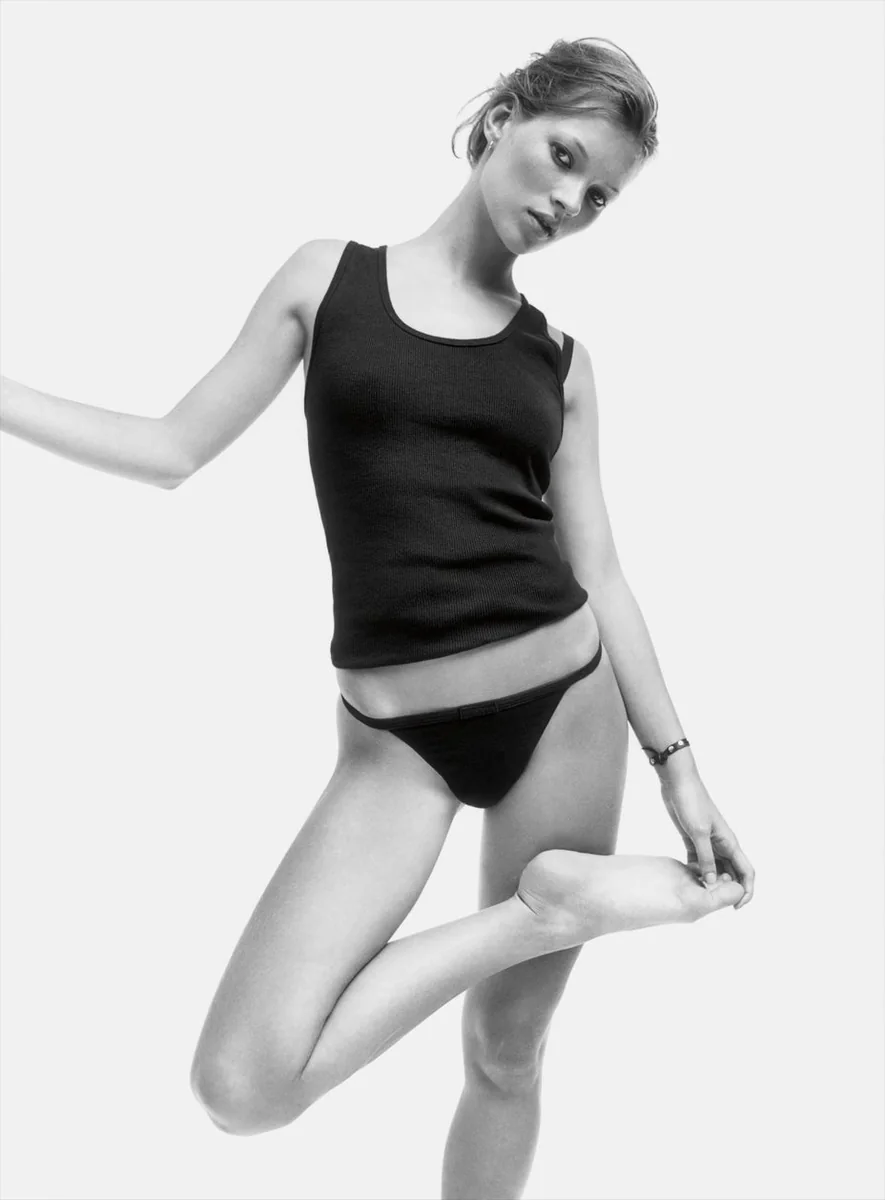
David Sims’s 1993 photograph Kate, made for Calvin Klein Underwear, offers another approach to the same category. Phillips documents the work and its campaign connection; the reference is a later print of the 1993 photograph. It is an instructive counterpoint to the fuller settings elsewhere in this selection.
The plain background keeps attention on the figure’s outline. A lifted foot and an off-centre balance introduce movement into an otherwise spare image. The black vest and underwear form a compact graphic structure. Look at how a small irregularity in the pose can give a simple campaign frame its own identity.
What to studyTry a controlled variation in balance or movement. A small gesture can provide enough visual interest for a minimal set.
Steven Klein
A direct gaze and a graphic garment shape
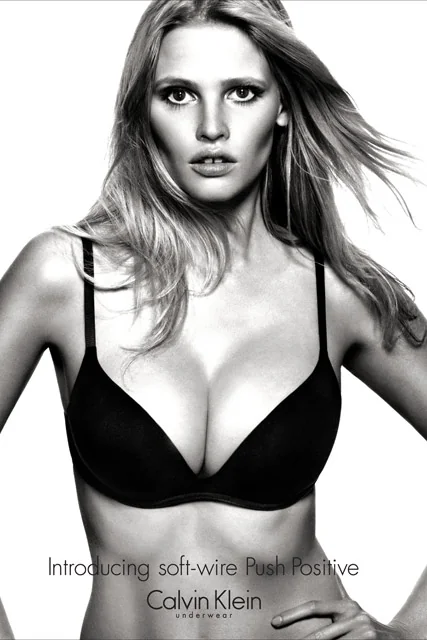
Steven Klein closes the selection with Lara Stone’s Calvin Klein Underwear Push Positive campaign for Autumn/Winter 2012. Marie Claire’s contemporary coverage credits Klein and places the shoot in New York. The photograph shows how a campaign can put the design of a single garment at the centre of a tightly framed portrait.
Stone’s direct gaze establishes contact with the viewer, while her hands on her hips create a firm outline. The black bra reads clearly against the pale background, with loose hair adding a softer texture around the face. The image’s force comes from the relationship between expression, posture and product shape.
What to studyCheck the face, arm position and garment as one composition. Each should support the same clear visual direction.
Which lingerie photography style fits your brief?
For a narrative with props and a strong setting, compare Ellen von Unwerth, Herb Ritts and Miles Aldridge. For a restrained campaign frame, explore David Sims, Mario Sorrenti and Mert & Marcus. Helmut Newton shows how location can shape an image’s identity. Bruce Weber and Russell James bring personality into portraiture, while Steven Klein offers a direct study of expression and garment shape.
Turn a reference into a useful shoot brief
Choose three references and write down what you want to learn from each: the camera height, the colour palette, the relationship to the background, or the subject’s gesture. Keep the photographer’s name and original source alongside every image. Then develop a fresh concept around your own casting, garments and location.
For lingerie and underwear work, agree the wardrobe, coverage, poses, crew and intended image use with everyone involved before the shoot. Plan a private changing space and make time for fit checks. A clear brief helps the team concentrate on expression and detail once the camera comes out.
Our guide to setting up a fashion editorial shoot covers the wider planning process. For another set of visual references, explore the top ten fashion, editorial and portrait photographers.
Develop your next story
Planning an editorial or model portfolio shoot in Hamburg?
Use these references to describe the direction you have in mind, then build a concept around your own identity. Browse Leon Blakk’s fashion and portrait stories and the current shooting packages and enquiry options to start planning your Hamburg project.
Frequently asked questions
Who are some influential lingerie and underwear photographers?
This selection includes Ellen von Unwerth, Herb Ritts, Russell James, Mert Alas & Marcus Piggott, Mario Sorrenti, Helmut Newton, Bruce Weber, Miles Aldridge, David Sims and Steven Klein. Each has a documented connection to lingerie, underwear, bodywear or the Victoria’s Secret backstage world.
What is the difference between lingerie photography and a fashion editorial?
Lingerie photography describes the clothing at the centre of the image. A fashion editorial describes a story or creative series, often made for a publication. A lingerie photograph can be part of an editorial, an advertising campaign, a catalogue or a personal portfolio; the brief and intended use determine the approach.
How should I use these reference photographs on a moodboard?
Link to the original source and keep the photographer’s credit with the image. Annotate the specific visual decision you want to discuss, then create your own composition. A credit or an available download does not itself grant permission to republish a photograph; public reuse requires an appropriate permission or licensing basis.
Reference photographs remain the work of the credited photographers and their respective rights holders. Links are provided for study and source context. No affiliation or endorsement is implied.